
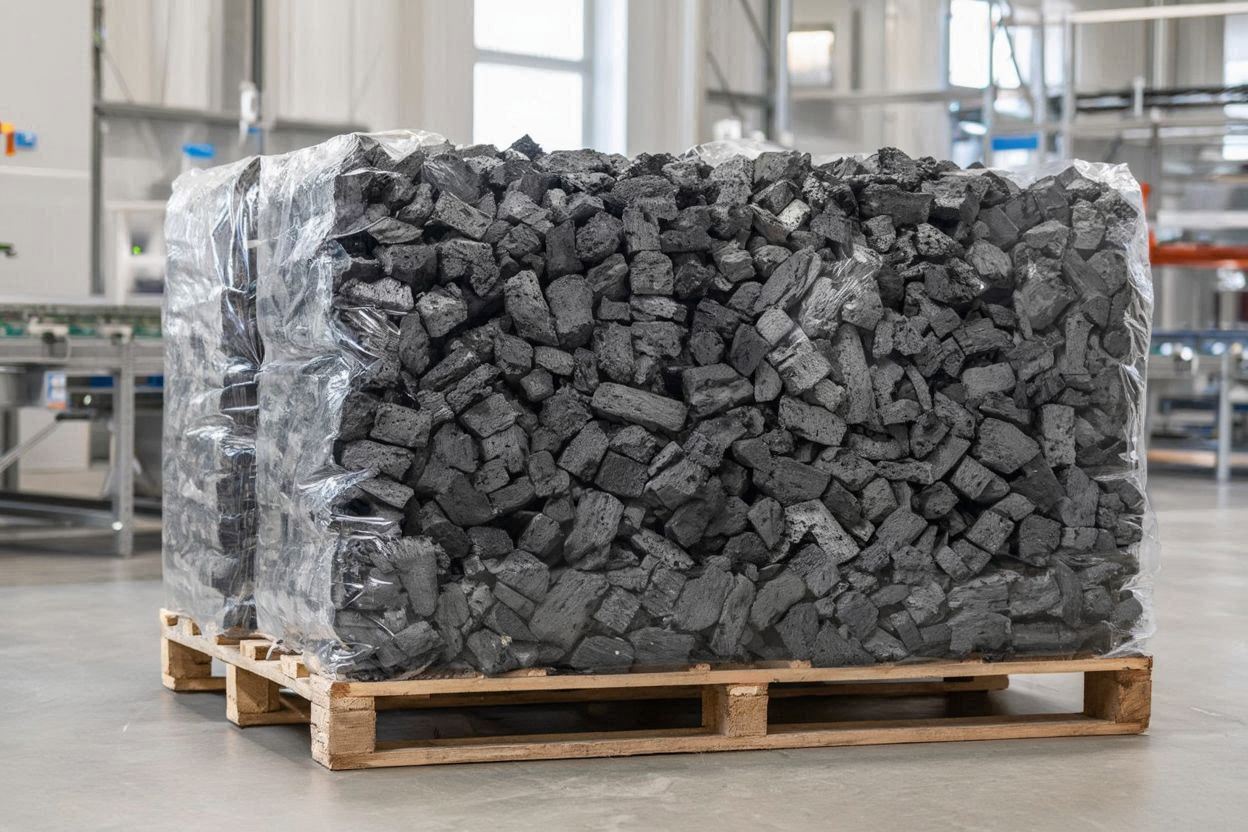
Industrial grade coconut shell charcoal is widely used across multiple industries due to its durability, consistent performance, and sustainable raw material source. As industrial operations demand reliable fuel and carbon materials, coconut shell based charcoal continues to gain strong preference for long term and high intensity applications.
Instead of depending on hardwood resources, manufacturers process coconut shells into dense carbon material with strong structural integrity. As a result, industries benefit from stable heat output, low ash residue, and dependable performance under demanding operational conditions.
Key Characteristics of Industrial Grade Coconut Shell Charcoal
Industrial grade coconut shell charcoal features a hard structure and uniform carbon composition. Therefore, it maintains consistent performance even during extended usage cycles.
Low moisture and ash content further support industrial efficiency. Consequently, equipment remains cleaner while operational downtime caused by residue buildup is reduced.
This charcoal also resists breakage during handling, storage, and transportation, which is essential for large scale industrial supply chains.
Production Standards for Industrial Applications
Manufacturers produce industrial grade charcoal through controlled production processes. First, they select mature coconut shells with suitable density and carbon potential.
After cleaning and drying, shells undergo carbonization under regulated temperatures with limited oxygen exposure. This step increases fixed carbon content while minimizing impurities.
Many producers follow standardized methods associated with coconut shell charcoal for industrial use to ensure stable quality and compliance with industrial requirements.
Industrial Applications and Usage Areas
Industrial grade coconut shell charcoal supports a wide range of applications. Manufacturing facilities use it as a fuel source for boilers, furnaces, and thermal processing systems.
In filtration industries, this charcoal serves as a base material for activated carbon used in water and air treatment systems.
Metal processing, chemical production, and energy related sectors also rely on industrial grade charcoal for processes that require stable heat and carbon consistency.
Operational Benefits for Industrial Users
Industries prioritize materials that support efficiency and cost control. Coconut shell based charcoal provides longer burning time, which reduces the frequency of material replacement.
Because of its low ash output, cleaning and maintenance requirements decrease. As a result, production workflows remain uninterrupted for longer periods.
Consistent quality also allows industries to maintain predictable performance across multiple production batches.
Environmental Advantages of Coconut Shell Based Industrial Charcoal
One major advantage of coconut shell charcoal lies in its environmental impact. By utilizing agricultural waste, producers reduce landfill accumulation and improve resource efficiency.
Coconut trees regenerate naturally, making this charcoal a renewable alternative to forest based materials.
As sustainability standards continue to influence industrial procurement, many companies actively choose materials that align with environmental responsibility goals.
Quality Control and Industrial Compliance
Reliable industrial performance depends on strict quality control. Manufacturers test moisture levels, ash content, fixed carbon values, and calorific performance.
These evaluations ensure the charcoal meets industrial specifications and operates consistently under varying load conditions.
Regular inspections and grading systems also help suppliers maintain long term trust with industrial buyers.
Storage and Logistics for Industrial Supply
Proper storage preserves charcoal performance. Industrial grade coconut shell charcoal should be kept in dry and well ventilated environments to prevent moisture absorption.
Durable packaging and bulk handling systems protect the material during transportation and storage.
As a result, industries receive charcoal that performs reliably from delivery through final use.
Conclusion
Industrial grade coconut shell charcoal delivers dependable performance, low residue output, and sustainable sourcing for demanding industrial operations. Through controlled production, strict quality control, and renewable raw materials, this charcoal supports efficiency and environmental responsibility.
To learn more about industrial charcoal solutions and sustainable supply options, visit the official homepage of VagusNet.
