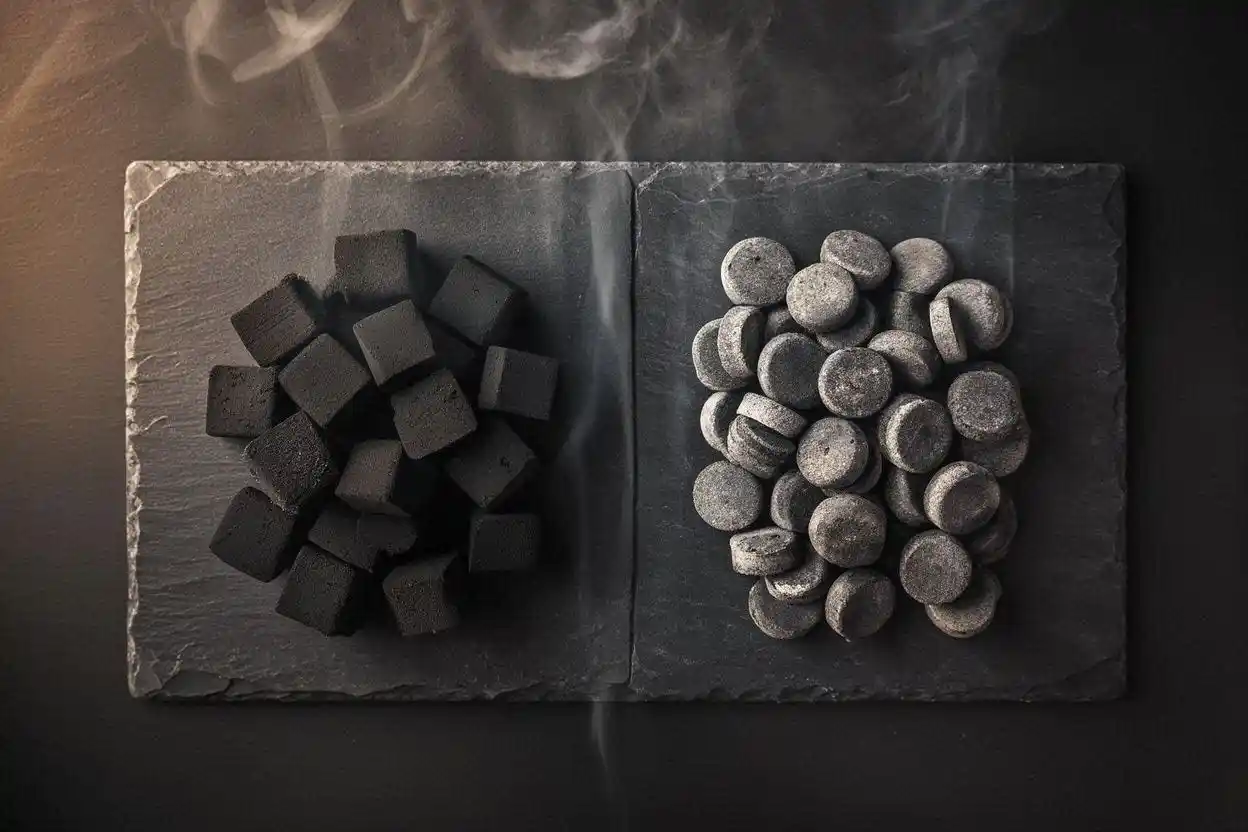
When it comes to shisha, the choice between coconut vs wood charcoal for shisha plays a bigger role than most people realize. This single decision directly affects heat consistency, smoke quality, and the overall flavor of your session.
Both options have loyal users across the globe. Understanding which charcoal suits your needs helps both casual smokers and business owners get the most out of every session.
Coconut Shell Charcoal for Shisha An Overview
Coconut shell charcoal is made from the hard shells of coconuts, a natural byproduct of the coconut industry. The shells go through a carbonization process at high temperatures, resulting in a dense and compact charcoal that burns efficiently.
It produces very little ash and almost no odor, making it a top choice for those who want a pure, clean smoking experience. Many premium hookah lounges around the world have switched exclusively to coconut charcoal for this reason.
Key characteristics:
- Burns longer and more consistently
- Produces minimal ash
- Neutral smell, does not interfere with tobacco flavor
- Eco-friendly, made from agricultural waste
Wood Charcoal for Shisha Pros and Cons
Wood charcoal is made from compressed wood powder and combustible materials. It is one of the oldest forms used in traditional hookah cultures across the Middle East and remains widely available in many markets today.
It ignites quickly with just a lighter or match, which makes it convenient for spontaneous sessions. However, it burns faster, produces more ash, and sometimes releases a faint chemical smell during the initial lighting phase that can affect the early draws of your smoke.
Key characteristics:
- Lights up quickly and easily
- Burns faster compared to coconut charcoal
- Produces more ash and residue
- May slightly affect the taste of shisha tobacco
Coconut vs Wood Hookah Charcoal Key Differences
When you look at the differences between coconut and wood hookah charcoal, the most noticeable factor is burn duration. Coconut charcoal lasts 45 to 60 minutes per session, while wood charcoal burns out in roughly 20 to 30 minutes.
Coconut charcoal also provides steadier, more controllable heat. This allows tobacco to heat evenly, resulting in smoother and more flavorful smoke throughout the entire session without the risk of harshness.
From a cost perspective, wood charcoal is cheaper upfront. However, since it burns faster, users need more pieces per session, making coconut charcoal significantly more cost-efficient in the long run for frequent smokers.
Which Shisha Charcoal Is Right for You
For casual users who want a quick setup, wood charcoal offers fast ignition and easy availability. It works well in situations where a charcoal burner or electric stove is not around.
For regular smokers and lounge owners, coconut shell charcoal is clearly the better investment. The clean burn, longer session time, and neutral flavor deliver a consistently premium shisha experience that keeps customers coming back. Its eco-friendly nature also appeals to businesses that value sustainability. Business owners can find helpful supplier guides, product comparisons, and industry insights at indobriquettescharcoal.
Conclusion
The coconut vs wood charcoal for shisha debate ultimately depends on your needs, habits, and context. However, coconut shell charcoal stands out as the superior option for most users and businesses. It delivers a cleaner, longer, and more consistent experience while supporting a more sustainable production cycle. Wood charcoal suits quick, casual sessions, but coconut charcoal wins on quality, efficiency, and flavor preservation. Whether you are a hobbyist or a professional lounge operator, investing in the right charcoal will elevate every session and reflect positively on your overall shisha experience.