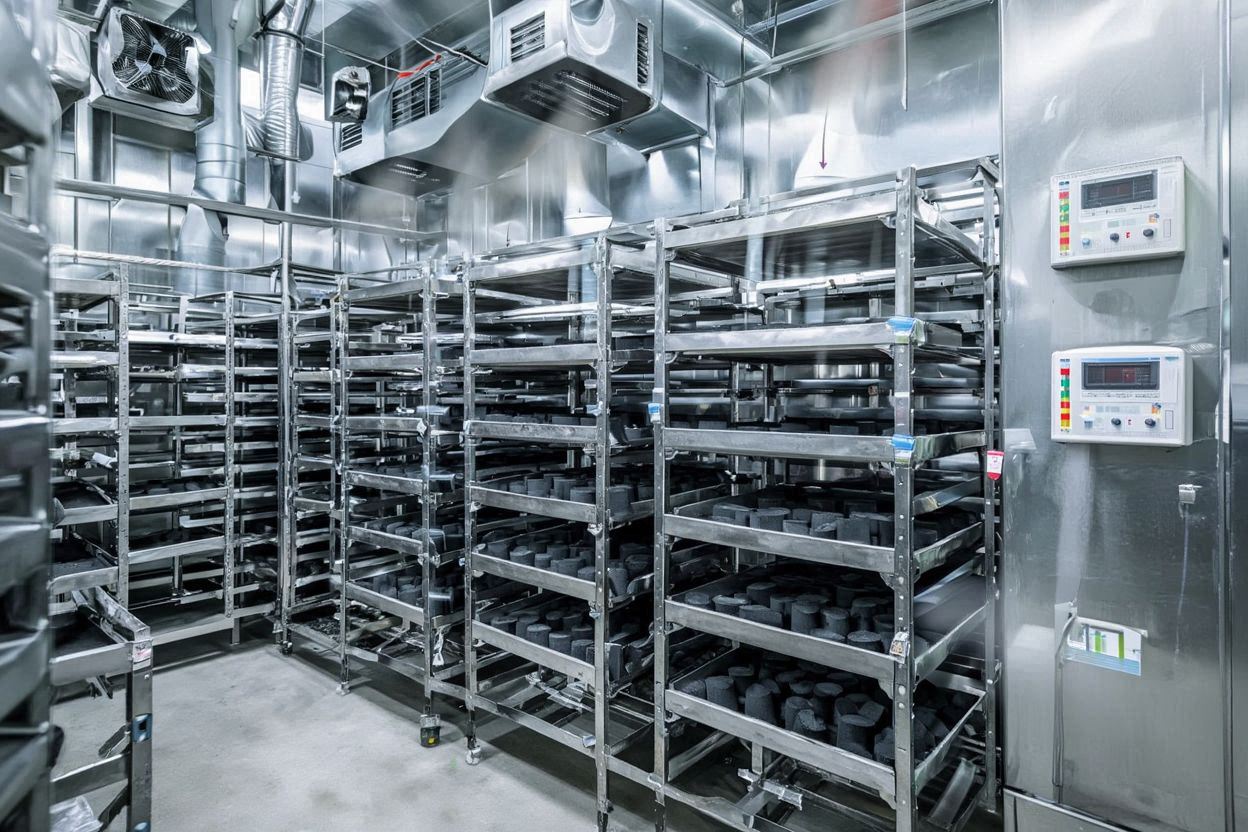
Hookah Charcoal Drying Process Optimization is a critical stage in charcoal manufacturing that ensures briquettes achieve the right moisture level, structural strength, and stable burning performance. Drying is not just about removing water, but about controlling speed, temperature, and airflow so the final product becomes strong, consistent, and ready for long hookah sessions.
In coconut-based hookah charcoal production, poor drying can ruin even high-quality raw materials. That is why manufacturers treat this stage as a precision process that directly impacts ignition, burn time, and ash quality.
Why Drying Optimization Matters
Drying determines how stable the final briquette will be. If moisture remains too high, the charcoal will struggle to ignite and produce uneven heat. If drying is too fast, the outer layer may harden while the inside stays moist, causing cracks.
A properly managed Hookah Charcoal Drying Process Optimization ensures balanced moisture removal. This balance improves durability, reduces breakage, and supports consistent combustion performance.
Moisture Removal After Pressing
After pressing, briquettes still contain moisture from binders and raw material processing. This moisture must be removed gradually to avoid structural damage.
If manufacturers rush this stage, internal pressure can build up and cause cracks or deformation. Careful Hookah Charcoal Drying Process Optimization helps maintain shape integrity while achieving ideal dryness for combustion.
Temperature Control In Drying Chambers
Temperature plays a major role in drying efficiency. Low temperatures may slow production, while high temperatures can damage briquette structure.
Most factories use controlled heat systems that gradually increase temperature. This ensures smooth evaporation without stressing the material. Stable temperature management is essential for effective Hookah Charcoal Drying Process Optimization.
Airflow And Moisture Evaporation
Air circulation helps carry moisture away from the briquettes. Without proper airflow, humidity builds up inside the drying chamber and slows the process.
Balanced airflow ensures even drying across all briquettes. It prevents uneven moisture distribution and supports consistent Hookah Charcoal Drying Process Optimization throughout the batch.
Drying Time And Production Balance
Drying time must match production speed. If drying is too short, briquettes remain moist. If too long, production efficiency drops.
Manufacturers carefully calculate drying duration based on briquette size, density, and binder content.
Impact Of Drying On Burn Quality
Drying directly affects ignition speed and burn stability. Properly dried briquettes ignite faster and burn more evenly.
If moisture remains trapped inside, the charcoal may produce excess smoke or inconsistent heat. Good Hookah Charcoal Drying Process Optimization improves overall user experience by ensuring clean and stable combustion.
Common Drying Problems
Several issues can occur if drying is not controlled properly. These include surface cracking, internal moisture retention, uneven hardness, and reduced burn time.
Role Of Equipment In Drying Efficiency
Modern drying systems use automated temperature and humidity controls. These systems help maintain consistent conditions throughout the drying chamber.
Using advanced equipment improves efficiency and reduces human error. This makes Hookah Charcoal Drying Process Optimization more reliable and scalable for industrial production.
Quality Control After Drying
After drying, quality control teams test moisture levels, strength, and ignition behavior. This ensures each batch meets production standards before packaging.
Only briquettes with stable structure and optimal moisture levels pass inspection. This step confirms successful Hookah Charcoal Drying Process Optimization.
Conclusion
Hookah Charcoal Drying Process Optimization is essential for producing strong, stable, and high-performance briquettes. It controls moisture removal, protects structure, and ensures consistent burning quality. When managed correctly, it improves ignition, reduces ash issues, and enhances overall user satisfaction.
For consistent raw material supply and stable production quality, many manufacturers rely on coconut charcoal briquette suplier. More insights into charcoal production and industry practices can be found at jacoid.com.